
Shell / Ammunition Inspection Solutions
One Application. Two Inspection Architectures.
MQS Technologies provides Digital X-ray inspection solutions for artillery shells and ammunition across different calibres. The inspection architecture is selected around the calibre, material, wall thickness, required penetration, throughput and facility layout.
Cabinet-Based and Bunker-Based Digital X-ray Inspection for Artillery Shells & Ammunition
Integrated Digital Radiography for production inspection.
- Suitable where shell size, penetration requirement and workflow fit a cabinet configuration.
- Configurable MQXR source options from 160 kV to 450 kV, depending on the application.
- Can integrate shell rotation, indexing, preset programs and DFPD imaging.
- Designed for repeatable inspection with a compact, engineered system footprint.
High-energy inspection for demanding penetration requirements.
- LINAC-based Digital Radiography installed in a shielded bunker.
- High-energy options in the 2–6 MeV range, selected according to penetration needs.
- Custom motion, positioning and handling can be engineered around shell geometry and bunker layout.
- Suited to applications where larger or denser sections require deeper penetration.
The inspection method stays the same. The deployment architecture changes.
Both configurations combine the X-ray source, digital detector, manipulation and software into a system engineered around the shell and the inspection objective. The final source, detector and handling configuration is application-specific.
How MQS Selects the Right Configuration
| Selection factor | What MQS evaluates |
|---|---|
| Shell / ammunition size | Calibre, diameter, length and handling constraints. |
| Material & wall thickness | Density and penetration required to reveal internal conditions. |
| Inspection objective | Defect target, required image quality and evidence / documentation needs. |
| Throughput | Cycle time, batch size and automation requirement. |
| Facility concept | Cabinet deployment or integration into a shielded bunker and production layout. |
Cabinet-Based Shell Inspection
Automated Digital Radiography for Repeatable Production Inspection
For applications that fit a cabinet-based architecture, MQS can combine digital X-ray imaging with automated shell handling, rotation and indexing. A reference MQS shell-inspection configuration uses a dual-station workflow to improve consistency and reduce manual dependency.
Reference Automated Workflow
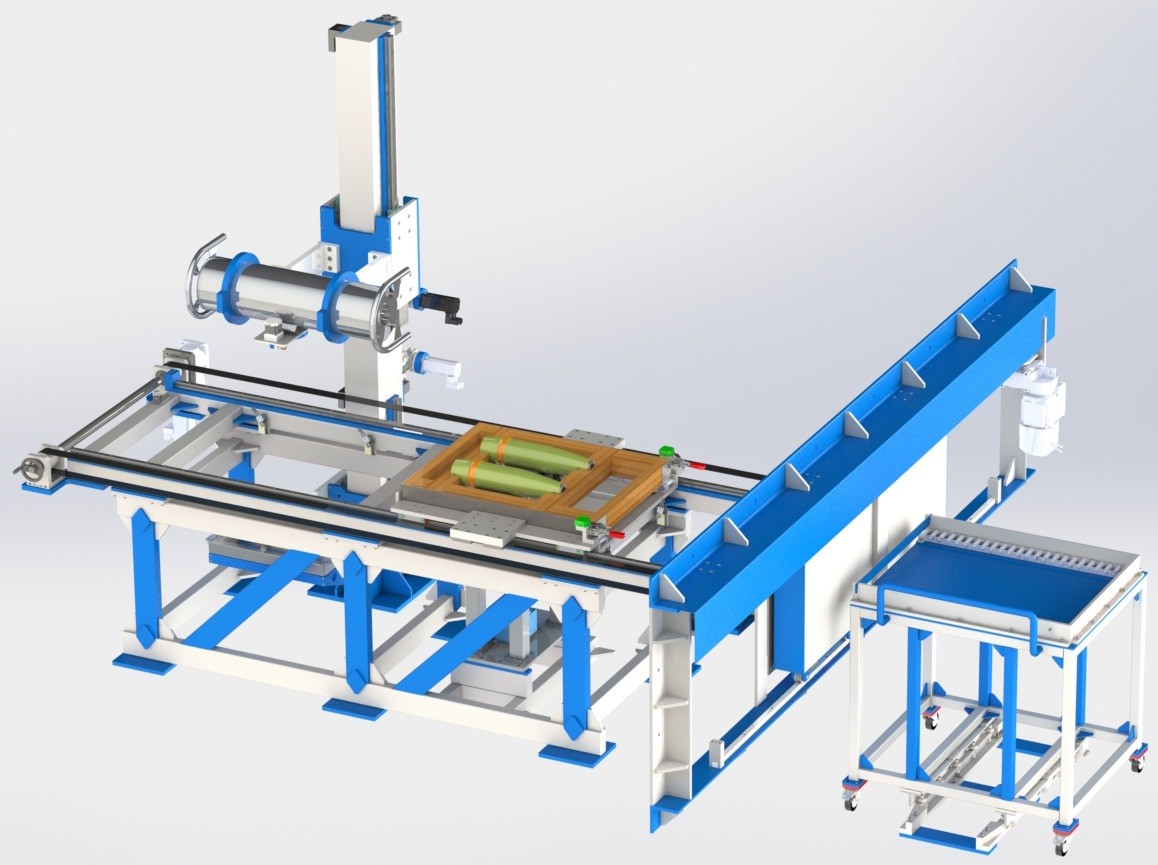
Reference MQS automated shell inspection and handling configuration
Bunker-Based Shell Inspection
High-Energy LINAC Inspection for Greater Penetration
When the inspection requires higher penetration than a cabinet-based configuration can provide, MQS can engineer a bunker-based shell inspection system using a high-energy LINAC source. The X-ray source, detector, shell positioning and control architecture are integrated around the shielded bunker and the required inspection sequence.
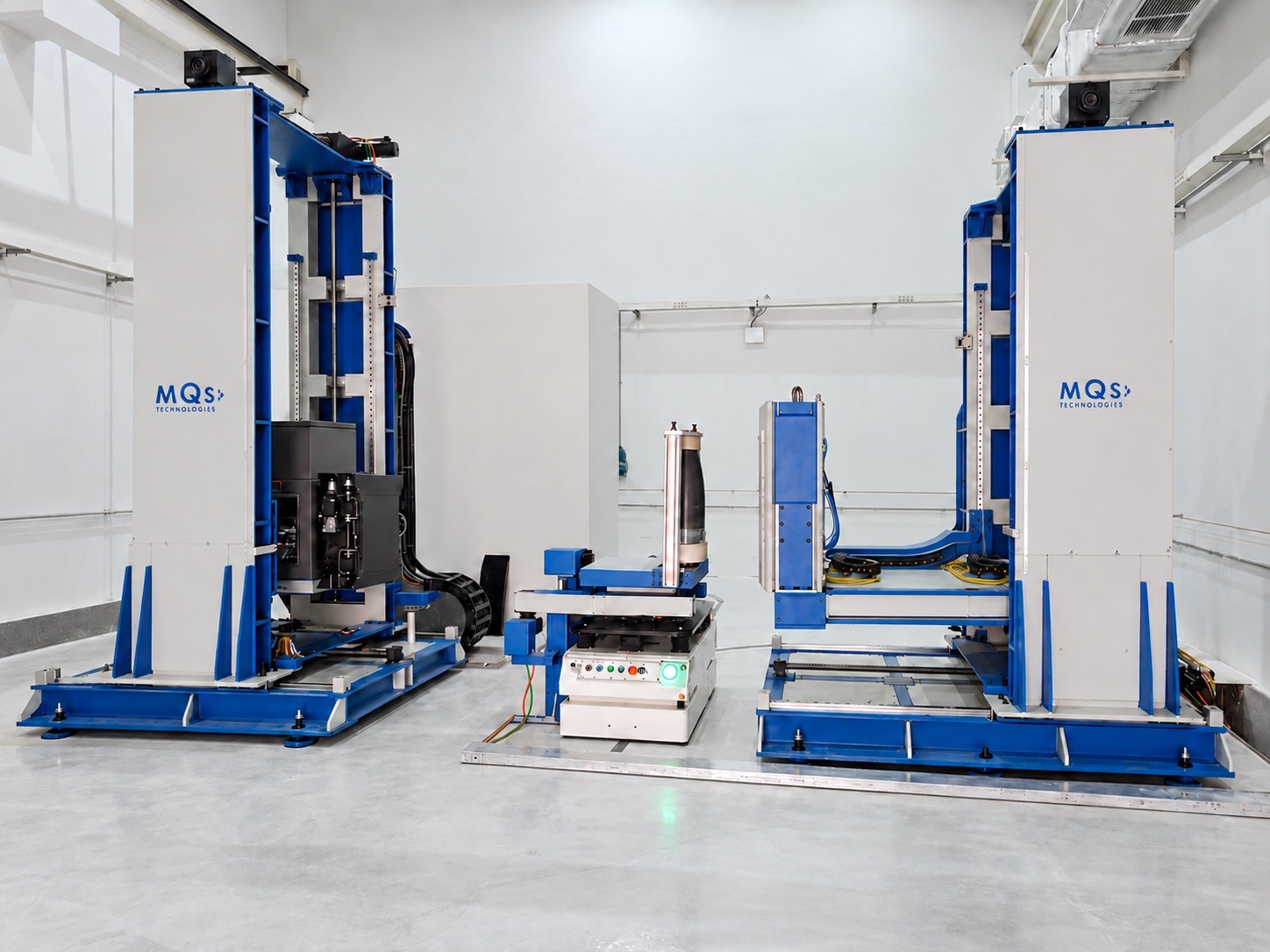
Representative MQS bunker-based LINAC shell inspection systems. Final configuration is engineered around the calibre, penetration requirement and bunker layout.
High-Energy Imaging
Penetration matched to the application.
- High-energy source options in the 2–6 MeV range are available depending on the required penetration.
- Source and DFPD detector pairing is selected for the component and imaging objective.
Bunker Integration
Designed around the facility.
- System architecture is integrated into a shielded bunker rather than a compact cabinet.
- Motion, detector positioning and controls can be adapted to the available layout.
Custom Handling
The shell defines the mechanism.
- Rotation, indexing and positioning can be configured around calibre and shell geometry.
- Automation can reduce manual handling and improve repeatability.
Digital Workflow
From image capture to review.
- Digital imaging supports repeatable inspection, image storage and documentation.
- Preset or programmed sequences can be developed around the inspection requirement.
Cabinet or bunker is an engineering decision, not a product hierarchy.
The right architecture depends on the shell, penetration requirement, throughput and site conditions. MQS can recommend the simpler cabinet configuration where it is sufficient, and move to a LINAC-based bunker solution when the application demands higher energy or a larger installation envelope.
Technical Configuration
Source and Detector Options
The supplied shell inspection material lists multiple X-ray source and DFPD options. Exact pairings should be finalized after the component and inspection requirement are reviewed by MQS engineering.
X-ray Source Options
| System architecture | X-ray source options | Typical deployment logic |
|---|---|---|
| Cabinet-Based | MQXR 160 / 225 / 320 / 450 series | Selected when the required penetration and component envelope fit an integrated cabinet system. |
| Bunker-Based | High Energy / LINAC 2–6 MeV | Selected when the application requires deeper penetration, larger handling space or bunker integration. |
DFPD Detector Options
| Detector | X-ray Range | Pixel Size | Active Area |
|---|---|---|---|
| MQXRD 0822 XX | 0–16 MeV | 200 µm | 200 × 200 mm |
| MQXRD 3025 XX | 0–450 kV | 139 µm | 250 × 300 mm |
| MQXRD 1621 XX | 0–16 MeV | 200 µm | 400 × 400 mm |
| MQXRD 4343 HE XX | 20–16 MeV | 139 µm | 427 × 427 mm |
Common Capabilities Across Both Architectures
Configurable Energy
Match the source to the material thickness and penetration need.
Digital Imaging
DFPD options support clear image capture and documentation.
Automation
Rotation, indexing and programmed sequences can improve consistency.
Custom Engineering
Handling, motion and layout can be adapted to the application.
Applications
Suitable for inspection of artillery shells and ammunition across calibres. The same engineering approach can also be extended to similar cylindrical inspection applications where internal integrity must be verified without destructive sectioning.
Bring Us the Calibre. We'll Engineer the Inspection.
Share the shell size, material, wall thickness, inspection objective, throughput and available facility layout. MQS can recommend a cabinet-based system or engineer a bunker-based LINAC solution around the requirement.
Talk to an expert